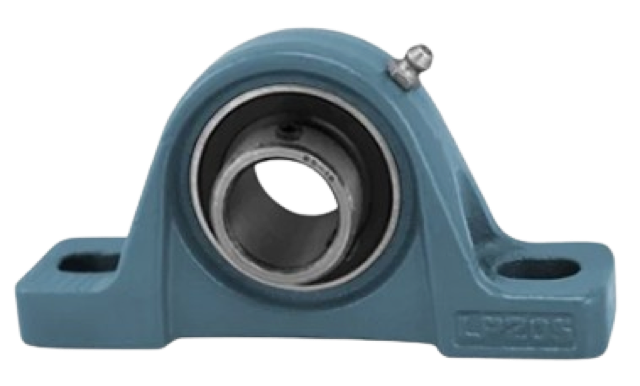
How can a buyer distinguish a 15/16-inch bore from a 1-inch bore without rounding errors?

LILY Bearing |

Mounted Bearings supplier category illustrationLILY BearingMounted BearingsCompare models and specificationsBrowse this category Advertisement · Category illustration

Best answer

Editor's pick

Convert the fraction before rounding anything

NIST defines an inch as exactly 25.4 mm.

Therefore 15/16 in × 25.4 mm/in equals 23.8125 mm, while 1 in equals 25.4 mm. Their nominal diameter difference is 1.5875 mm. These are exact unit-conversion results for the stated nominal sizes, not measurements of a particular bearing. They also do not provide manufacturing tolerances or an acceptable shaft-fit range. The practical benefit of carrying the fraction through the calculation is that a nearby-looking metric number cannot conceal a different nominal requirement. Keep the original unit attached to every value until both sizes have been converted consistently.
Other answers (1)

Make the inquiry resistant to transcription errors

Write “15/16 in nominal bore, equivalent to 23.8125 mm” when that is the verified equipment requirement.

If comparing a 1 in offer, put its 25.4 mm nominal bore on a separate line. Do not shorten both descriptions to a nearby whole-millimetre category, and do not remove the inch-size suffix from the complete part number. Ask the supplier to confirm the nominal bore against its exact drawing and identify the execution being quoted. If an old record says only “approximately 24 mm,” treat it as an identification clue rather than proof of a fractional-inch designation. The conversion narrows the question; it cannot recover missing source information.