How does a self-aligning ball bearing differ from an ordinary deep groove ball bearing?

LILY Bearing |

Mounted Bearings supplier category illustrationLILY BearingMounted BearingsCompare models and specificationsBrowse this category Advertisement · Category illustration

Best answer

Editor's pick

Identify the actual alignment mechanism

NSK describes self-aligning ball bearings as having two rows of balls and a spherical outer-ring raceway.

That raceway allows the inner assembly to change angular position relative to the outer ring within the product's limits. The term therefore refers to a defined internal bearing design, not simply to any component with a rounded external surface. An ordinary deep groove ball bearing has a different internal arrangement. Distinguishing the designs helps a buyer ask the right replacement question: whether the required bearing type and permitted alignment behaviour are preserved. It does not establish a permissible angle, speed or axial load for an unspecified product.

Other answers (1)

Compare the required function before comparing appearance

Start with the equipment drawing and identify whether angular accommodation is expected inside the bearing, at a mounted-unit seat, or elsewhere in the machine.

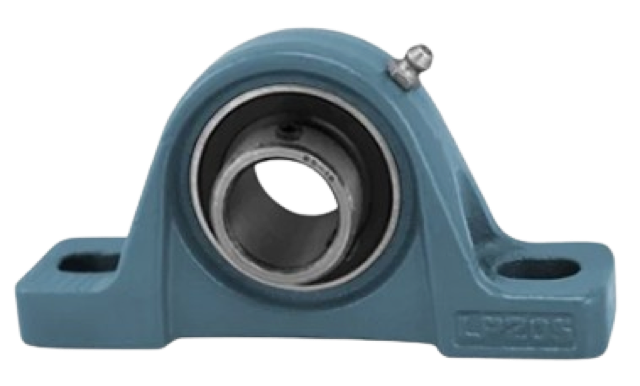
Then compare the exact bearing type and the manufacturer's limitations. For example, two assemblies might both appear rounded in a photograph, while only one contains a self-aligning ball bearing. A photograph alone cannot settle that difference. Ask for the sectional drawing or product-type description and retain it with the inquiry. If the original machine relies on alignment accommodation, document that requirement explicitly; if the requirement is unknown, do not convert the presence of a rounded surface into an assumed engineering capability.