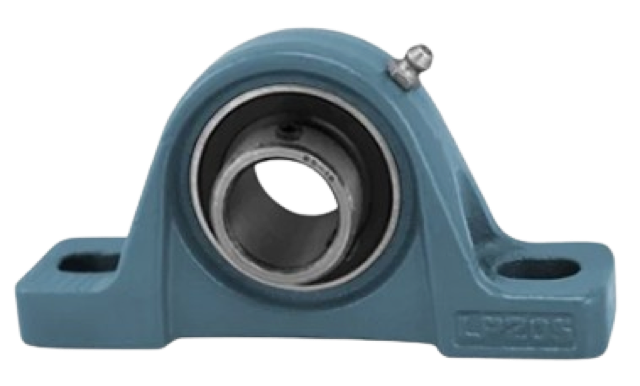
What must be checked before using a self-aligning bearing's misalignment capability?

LILY Bearing |

Mounted Bearings supplier category illustrationLILY BearingMounted BearingsCompare models and specificationsBrowse this category Advertisement · Category illustration

Best answer

Editor's pick

An alignment feature still has an application envelope

A self-aligning bearing's internal geometry can accommodate angular deviation within defined conditions.

That does not establish an unlimited permissible angle for the assembled machine. Seals, covers, shaft shoulders and housing features can impose additional restrictions, while load and motion determine whether the intended alignment behaviour is applicable. Manufacturer selection guidance treats alignment as one part of the design review. Obtain the exact product's permitted conditions and distinguish assembly misalignment from movement during operation. A generic bearing-family description cannot establish that every surrounding component will remain correctly positioned or free of unintended contact at the proposed angle.

Other answers (1)

Define the angle, its location and when it occurs

Use the assembly drawing to identify which axes differ and where the angle is measured.

Record whether the condition is fixed after installation or changes as the machine operates. Then compare the exact bearing, sealing arrangement and nearby interfaces with the manufacturer's limits. For example, an internal bearing may accommodate the specified angular relation while an adjacent cover has not been checked for clearance. Keep that interface unresolved until the assembly evidence is available. This review avoids assigning a universal misalignment figure to the whole unit and makes clear which component's published capability supports each part of the proposed arrangement.