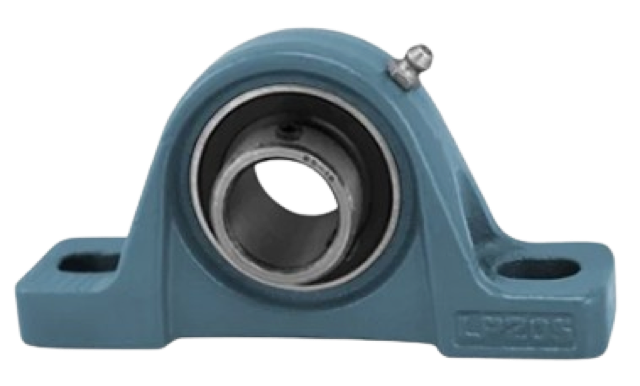
Why does grease-gun cleanliness matter even when the bearing has seals?

LILY Bearing |

Mounted Bearings supplier category illustrationLILY BearingMounted BearingsCompare models and specificationsBrowse this category Advertisement · Category illustration

Best answer

Editor's pick

Consider the route used to add the grease

A sealing arrangement limits particular routes of external contamination, but relubrication deliberately introduces material into the assembly.

Dirt carried on a fitting, delivery connection or lubricant-handling tool can therefore bypass the protection assumed from the bearing's seals. Manufacturer handling and maintenance guidance emphasises cleanliness and control of contamination. The practical question is not simply whether the bearing is sealed; it is whether the entire transfer from the lubricant container to the intended lubrication point preserves the required product and cleanliness. A well-protected bearing can still receive the wrong grease or contaminated material during an otherwise routine maintenance task.
Other answers (1)

Make lubricant transfer identifiable and repeatable

Assign the delivery equipment to a known lubricant, keep its identification readable and follow the applicable cleaning and connection procedure.

Confirm the lubrication point and required product before adding grease. Record any damaged fitting, exposed connection or uncertainty about what was previously in the equipment. Separate clean lubricant handling from dismantling debris and used cleaning materials. If the gun's contents cannot be identified, report that fact instead of assuming a familiar colour proves the grease type. This sequence is a practical control record, not a laboratory cleanliness certification. Its value is that it addresses a contamination and product-mix-up path that the presence of seals alone does not resolve.